Who We Are
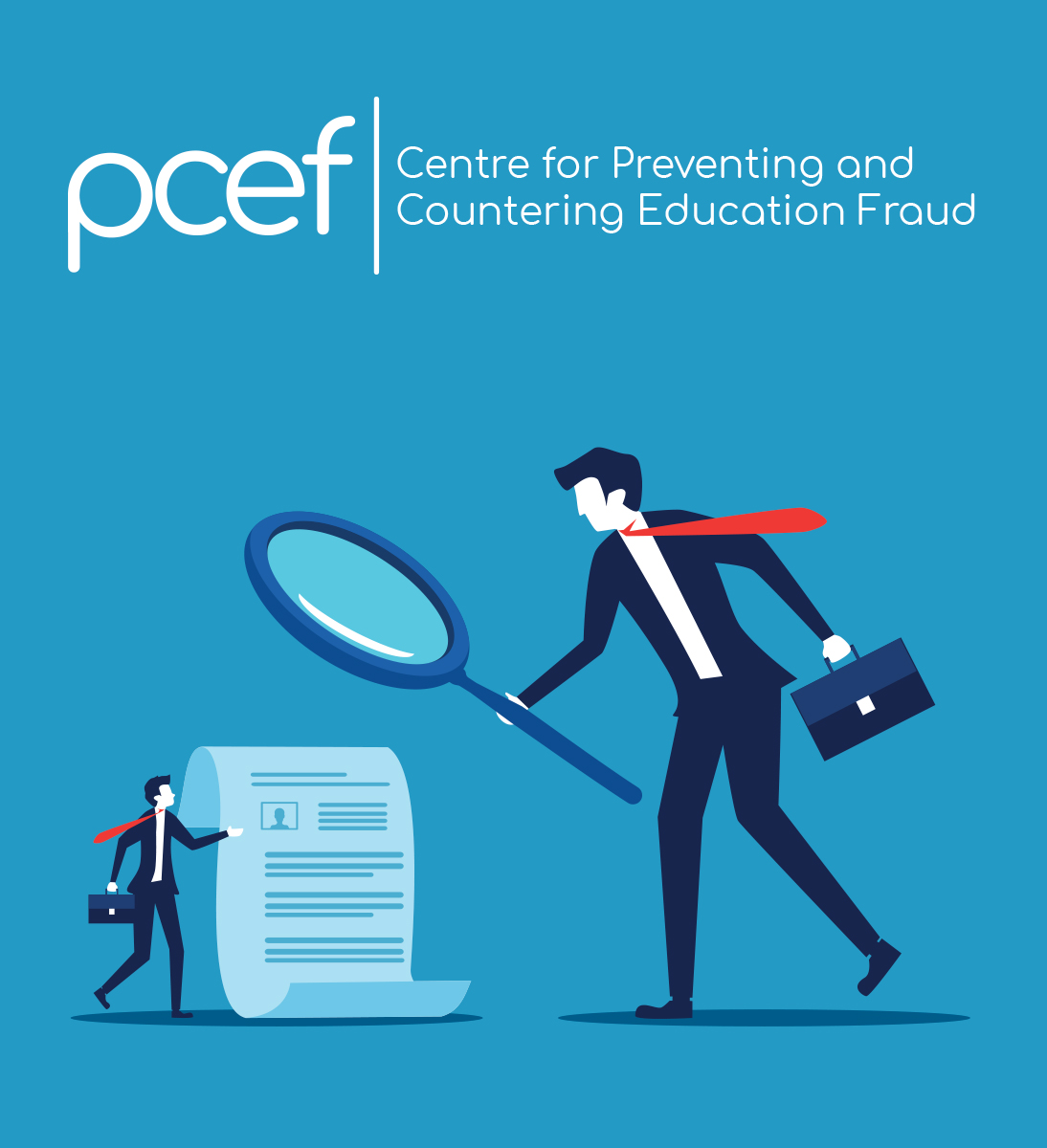
The Council of Europe and the Italian Information Centre on Academic Mobility and Equivalence (CIMEA), acting under the mandate of the Italian Ministry for Universities and Research, on 26 June 2025 signed a Memorandum of Understanding to establish in Italy the Centre for Preventing and Countering Education Fraud. The Centre marks a major step forward in strengthening Europe’s collective response to education fraud and reinforcing academic integrity.
Governance
The Centre is hosted by CIMEA in Rome, working in close coordination with the Education Department of the Council of Europe in Strasbourg, and engaging with networks across Europe.

 |
 |
 |
– Villano Qirazi, Head of the Education Department – Council of Europe
– Prof. Luca Lantero, Director General – CIMEA
How to collaborate
The Centre carries out its activities in collaboration with global organisations, institutions, and networks operating in the education sector at all levels in order to prevent and combat fraud in education.
If you are an organisation or institution operating in this sector or dealing with issues related to transparency, integrity, and ethics in education and would like to collaborate with the Center or become a Partner, please write to the following address: info@pcef.eu
 |
 |
 |
The ETINED Platform is a network of specialists appointed by member States of the Council of Europe and of States Parties to the European Cultural Convention (50 States).
The Platform wants to propose a new approach based on the idea that quality education will only be achieved, and corruption effectively addressed, if all relevant sectors of society commit fully to fundamental positive ethical principles for public and professional life, rather than relying only upon top-down mechanistic regulatory measures.
ETINED wants to help develop a culture of democracy and participation, grounded in the principles of ethics, transparency, and integrity. Corruption should be fought through legal norms and structures, but it is not enough. It must also be considered unacceptable by stakeholders and the public at large.
The mission is to share information and good practices in the field of transparency and integrity in education; contribute to the development of adequate answers to challenges that corruption poses to the sector of education and higher education; create a virtuous cycle in education, whereby all actors commit to fundamental positive ethical principles; develop capacity-building for all actors.
The Institute for Higher Education Law and Governance (IHELG) is home to sponsored research and academic programs and projects that examine higher education systems and policy issues from a wide range of analytical perspectives, including those of social scientists, policy makers, and institutional leaders from across sectors within Europe and abroad.
The Institute is comprised of a multi-disciplinary group of faculty, researchers, and graduate students, and it is housed in the European Public Law Organization (EPLO).
The Institute has been established in order to promote the research, development of studies, opinions, education, and training in the field of higher education studies of a global or multinational dimension. The field of interest of the IHELG includes the study and research of situations characterized as global and/or international higher education studies with the aim to identify and analyze the instruments to be used for their management, the models of public communication, the impact of policies, the best practices used both at a legislative and administrative level.
Maqsut Narikbayev University (MNU) is widely recognized as a leading institution for legal education, innovation, and international collaboration in Central Asia. Located in the heart of Astana, MNU educates the next generation of Kazakhstan’s leaders and plays an active participates in global academic and policy dialogue. The University delivers academic programs that meet the highest international standards, supported by excellence in research, practice-oriented teaching, and engagement in global initiatives.
MNU serves as an active hub for global dialogue and academic cooperation. The University regularly hosts heads of state, leaders of international organizations, ambassadors, and distinguished global experts, thereby reinforcing its role in promoting ethics, transparency, and integrity in higher education.
Building on this commitment to responsible and forward-looking institutional development, MNU also supports the UN Sustainable Development Agenda and is dedicated to fostering a culture of sustainability on campus. In this context, the University strengthens its contribution to the Sustainable Development Goals each year through education, research, community engagement, and operational practices.
If you would like to be informed about the centre’s activities and receive updates on our publications, please contact us at info@pcef.eu and become one of our stakeholder organisations.